HADAL
The deepest part of the ocean is not something you read on an archive page; you see it by going down. As you scroll you descend, and pressure, light and signal change with you.
- SCROLL = DESCENT
- CURSOR = SONAR
- DEPTH = PRESSURE
−200 M / MESOPELAGIC
Light ends here.
The last layer the sun reaches. Below this everything is recorded by sonar and hydrophone rather than by camera. The eye is done; the ear takes over.
−1,000 M / BATHYPELAGIC
First contact.
The proximity sonar has caught something. It has a bearing and a distance but no name — nothing in the archive matches it yet.
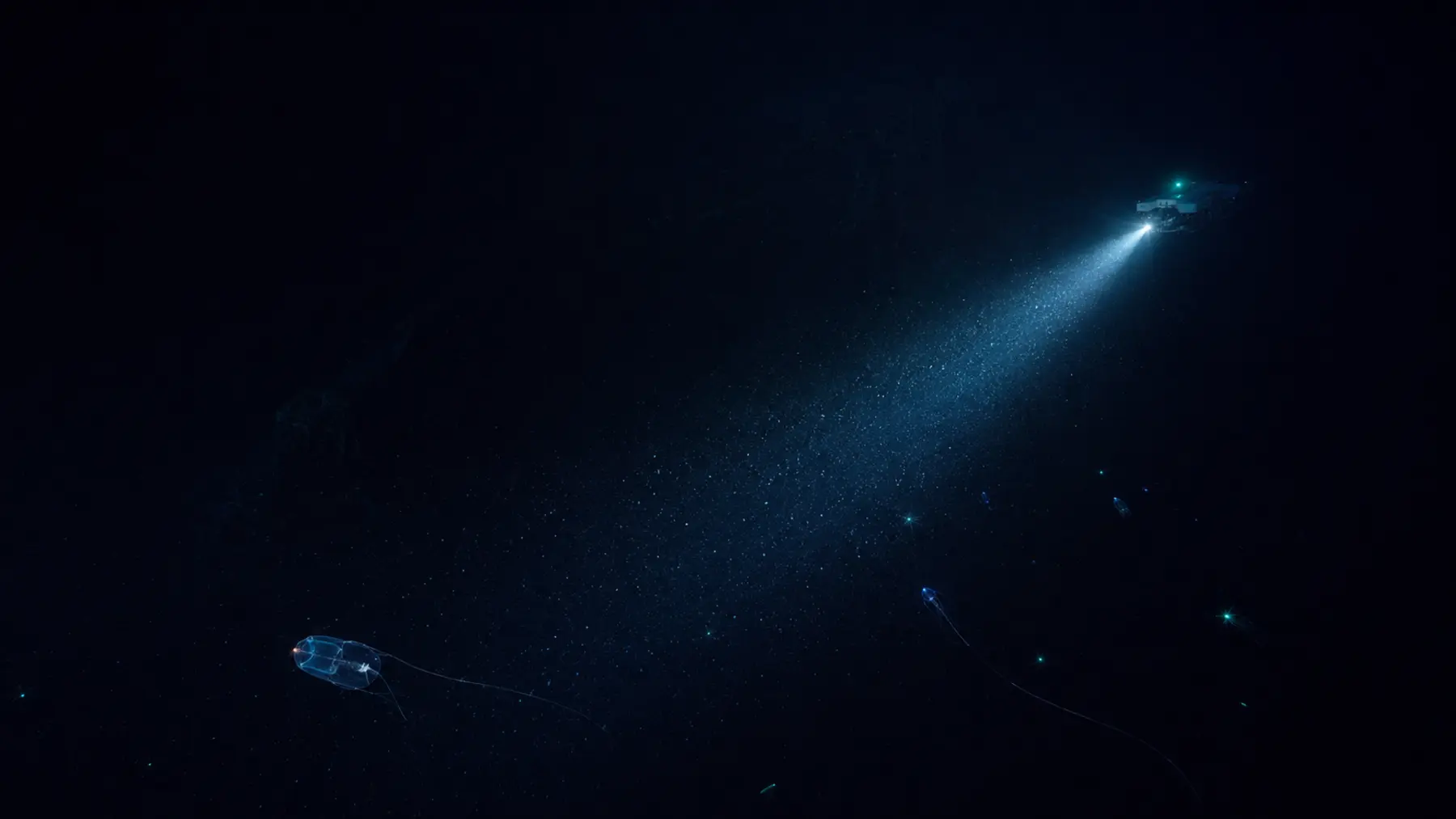
- Proximity sonar
- CONTACT
- Distance
- 18 M
- Bearing
- 284°
- Status
- UNCLASSIFIED
−4,000 M / ABYSSOPELAGIC
Aurelia.
A specimen that makes its own light, emitting at 472 nanometres — exactly where the human eye is most sensitive to blue. The precise wavelength something would pick if it wanted to be seen in the dark.
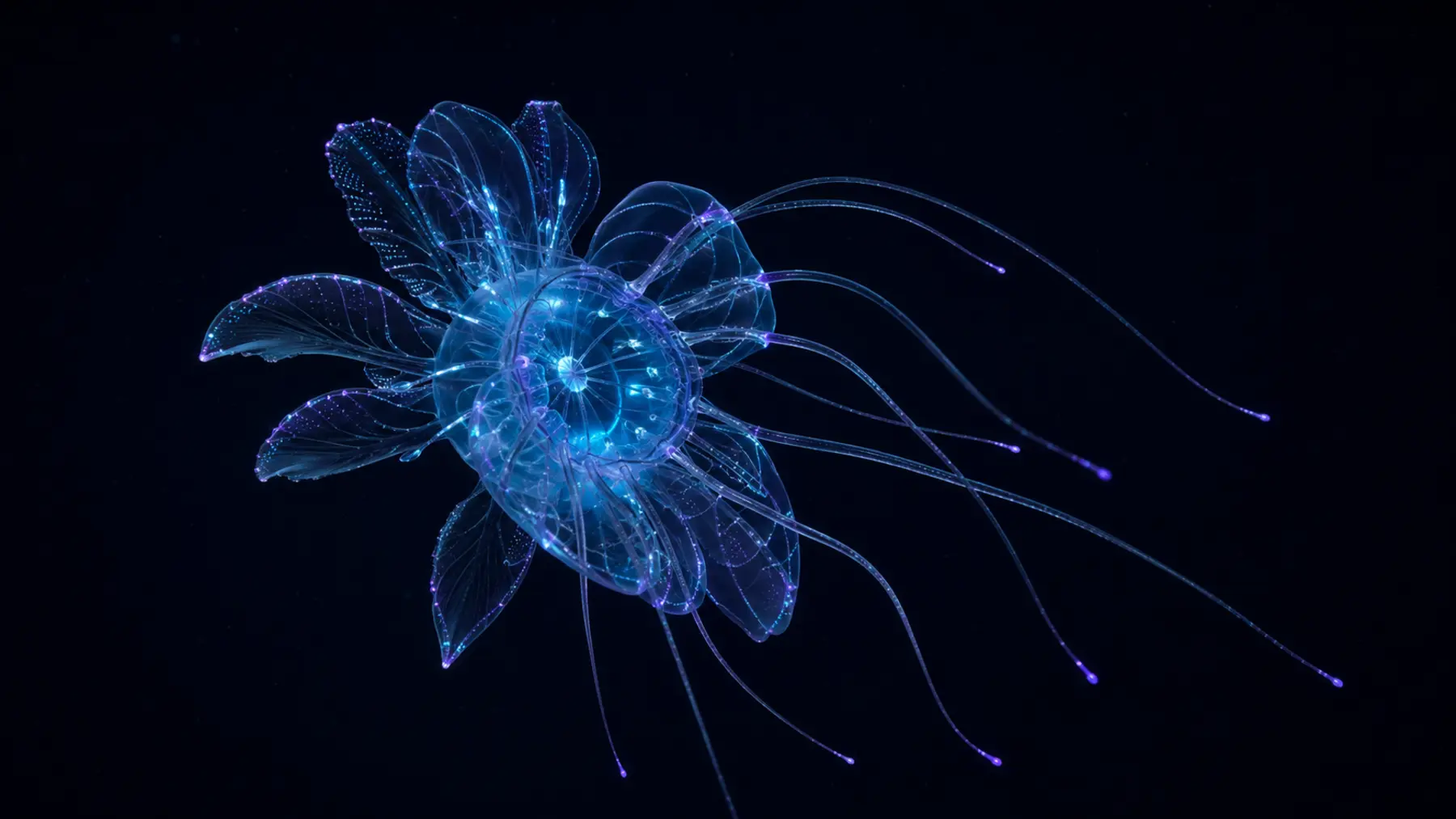
- Specimen
- 071 / AURELIA
- Emission
- 472 NM
- Pressure
- 402 BAR
- Status
- NEW
−6,500 M / HYDROPHONE
Unknown
signal 04.
A forty-two second recording, repeating itself. No source was ever found. This is also where the question of how to archive a sound begins: is a waveform an image, or a document?
00:42 / LOOPING
−8,420 M / HADAL
Challenger.
The floor. Eight kilometres of water above, and 842 bar bearing down on every square centimetre. At this depth keeping a record is harder than making one.
- Zone
- HADAL
- Depth
- 8,420 M
- Pressure
- 842 BAR
- Mission
- H-07 / 07 MIN
RETURN TO SURFACE
Not an archive.
A record.
A museum is not a display case; it preserves the conditions of what it holds as well. This prototype keeps depth not as a number but as a distance you travel.
BACK TO THE VISOLVE ARCHIVE ↗︎